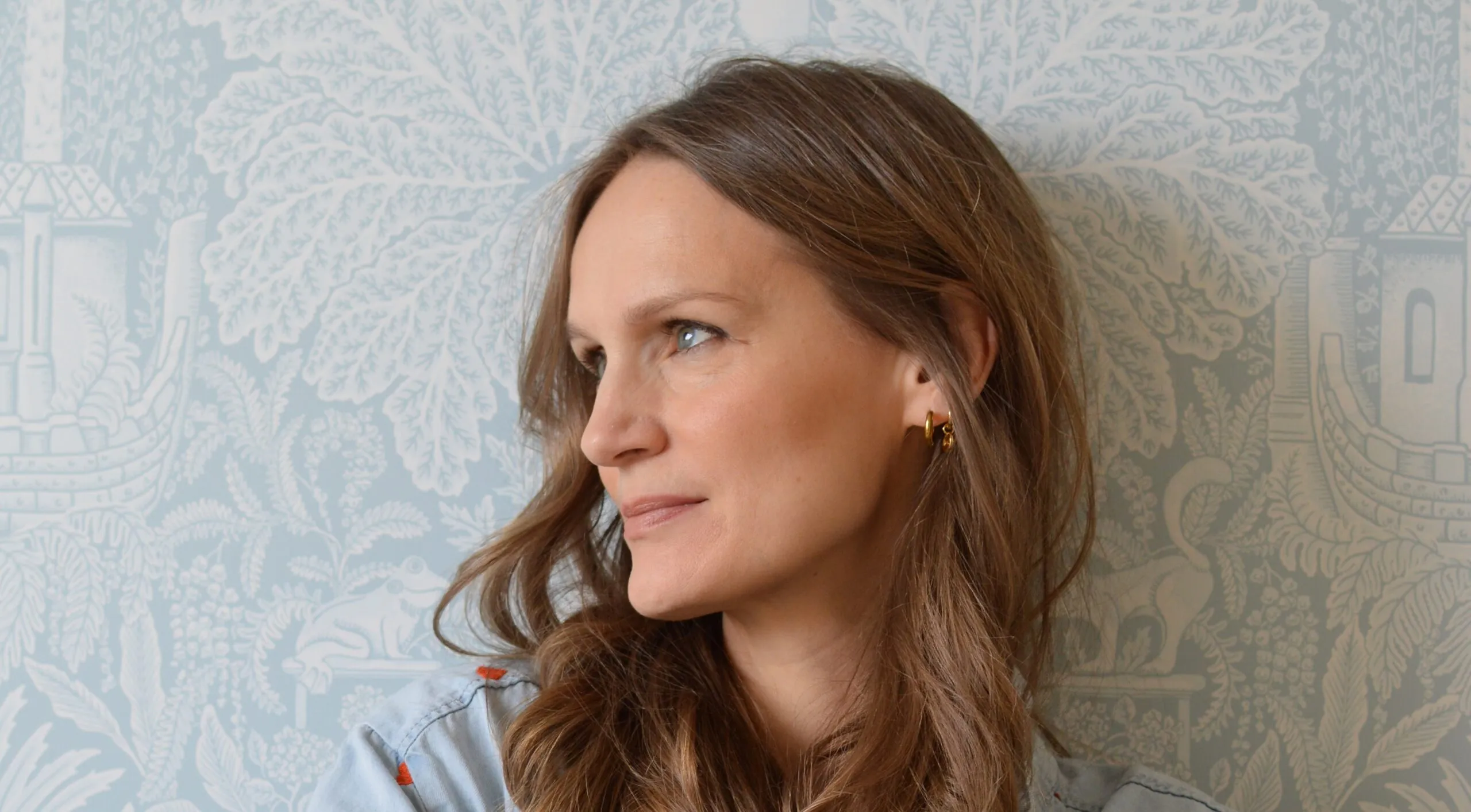
Unpacked: Fanny Shorter on narrative, nature, and the beauty of imperfection
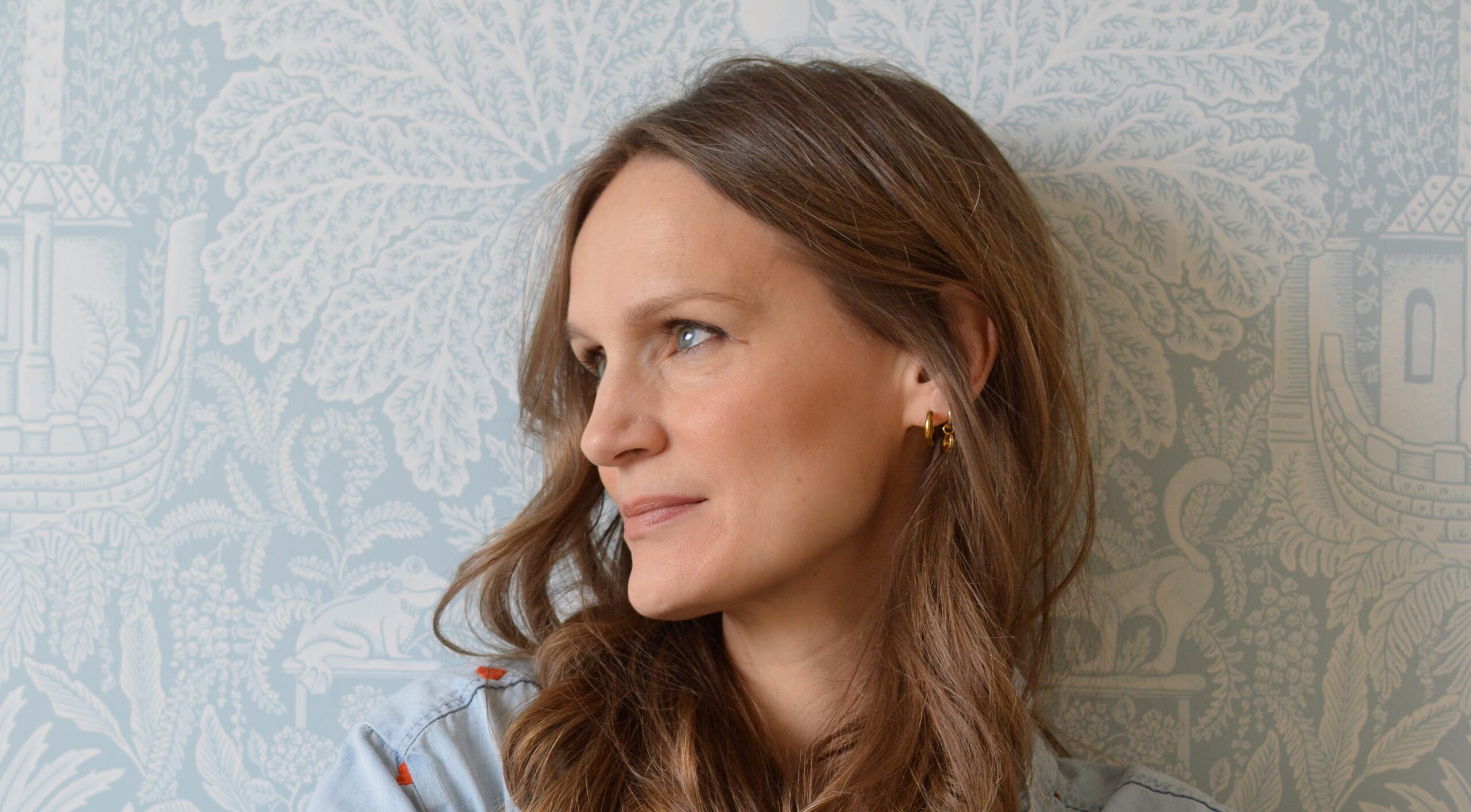
By Gemma Sudlow, EVP, Group Commercial and Marketing
I first encountered Fanny Shorter’s work via a prominent interior designer friend in London who often used her fabrics in their interior schematics. As an art history major and decorative arts specialist, the literary and historical design references in her hand-printed textiles resonated with my own aesthetic sensibility.
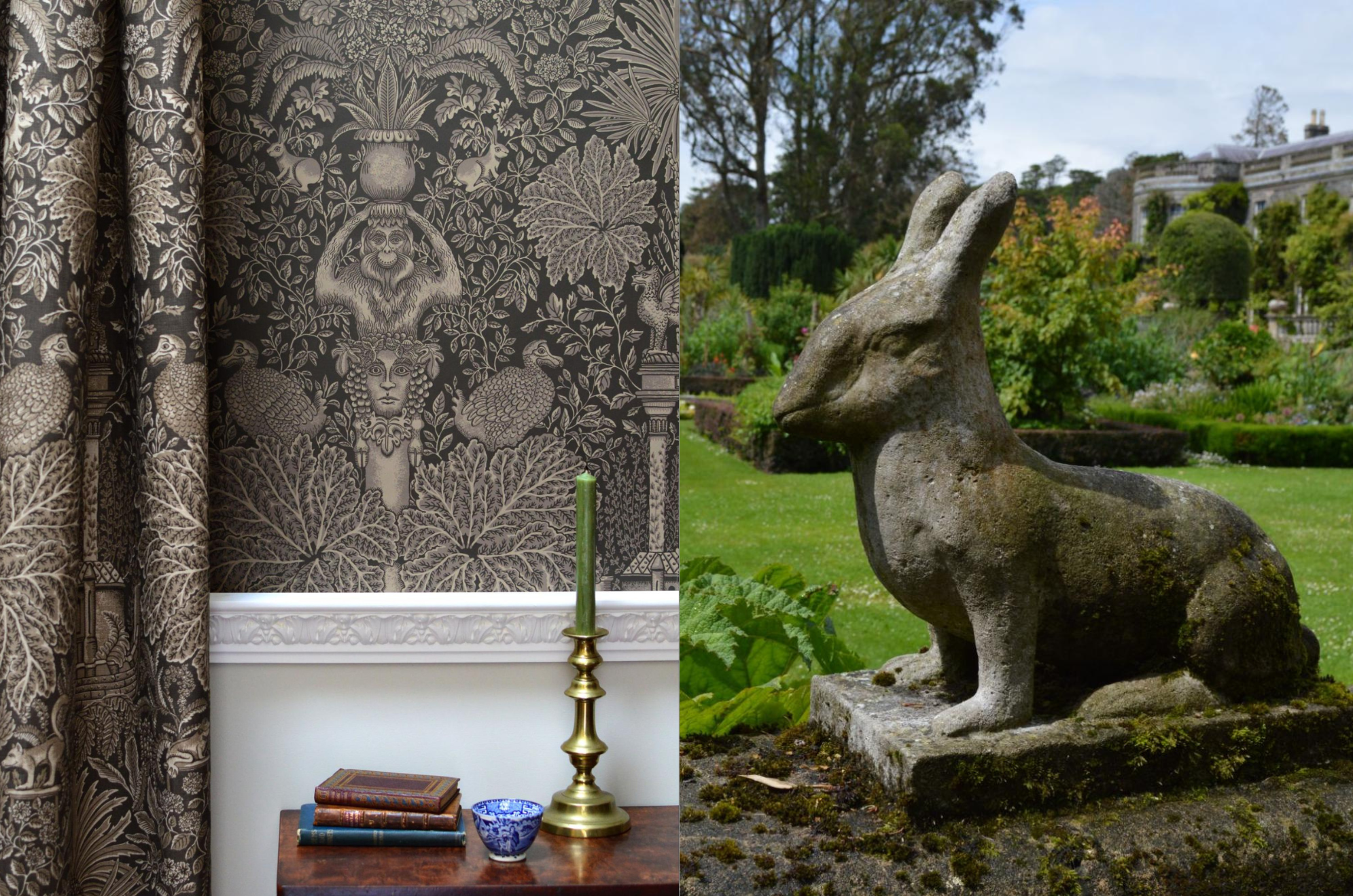
Fanny designs and prints textiles and wallpapers from a studio in rural Wiltshire. Her work is rooted in the histories of great houses, the myths of ancient gardens, and the idyllic pleasures of the English countryside. Her newest collection, Circe’s Garden, is the most ambitious yet: a design born from an Irish estate, a formidable society hostess, and a cast of mythological creatures rendered in stone. I am entranced!
Recently, I had the distinct pleasure of sitting down with Fanny to talk about storytelling, craft, and why the things we choose with intention are always the ones that last.
Gemma Sudlow: Your work is deeply rooted in storytelling. Where do your designs typically begin?
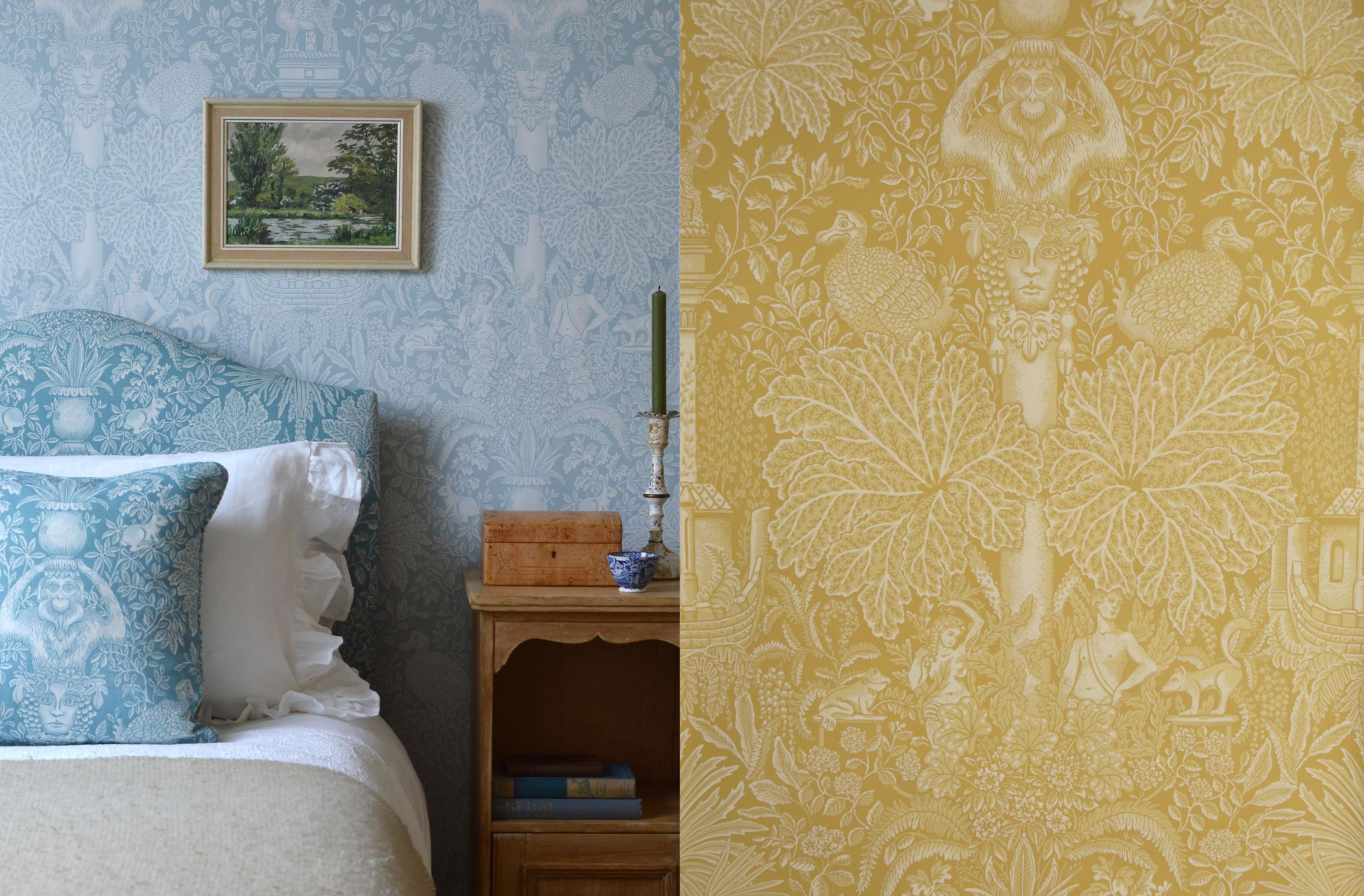
Fanny Shorter: It usually starts with a story — literally a novel, or more often the narrative attached to a place or object: its history, its design, the people connected to it. Our newest collection, Circe’s Garden, is inspired by Mount Stewart in Northern Ireland and Edith Londonderry’s extraordinary gardens there. The gardens are unexpectedly tropical, peppered with statues of animals and mythical beasts. Edith was a formidable figure — plant collector, society hostess, founder of the Women’s Legion — who ran the Ark Club, a weekly gathering whose members included Churchill, Chamberlain, and JM Barrie. Sculptor Thomas Beattie designed each member’s animal alter ego, and these creatures now populate the gardens. The central orangutan sits atop a herm pillar, representing the metamorphosis of Odysseus’s crew — at the hands of Edith herself, cast as Circe. Even the colourway was guided by her.
GS: Speaking of color, you’ve described your aesthetic as drawing from a Fauvist palette and the V&A vaults in equal measure. How did you arrive at that combination?
It happened gradually. I started with illustration, surface decoration mostly, and the move into hand-printed textiles felt inevitable. The V&A is a constant reference point. And the Fauvist influence comes from a love of color that isn’t afraid of itself.
GS: You began as an illustrator before moving into hand-printed textiles. What drew you in that direction?
FS: Decoration, particularly in interiors, can really change a mood or the feeling of a space; it can bring energy, calm, or joy to its inhabitants. I love being a part of that possibility.
GS: Nature seems to be a constant thread. What keeps drawing you back?
FS: We get so much from nature — it makes complete sense to bring it inside. I grew up in Winchester, surrounded by water meadows and the downs, and I live in the countryside now. It’s a bottomless well of pattern inspiration, but also narrative: life-cycles, seasons, growth, adaptation. It really does have it all.

GS: There’s something in your work that feels both deeply rooted in tradition and entirely of the moment. When I see it installed, it feels alive. How do you hold those two things together?
FS: I often look to traditional designs to guide me on what works pattern-wise. While my illustrative style has a contemporary feel, hand-printing softens the bolder motifs and colours — the lines are less defined, the ink thicker, the colour deeper. With the fabrics especially, even the pressure the printer applies affects the finished product. As a result, it creates a looser, more human sensibility.
GS: What does hand screen-printing allow you to achieve that other methods can’t?
FS: We hand screen-print all but two of our fabrics. Supporting the factories that offer these traditional techniques is very important to me. The finished product reveals the skill and human endeavor behind the printing — you can see and feel how it was made in a way you simply can’t with other methods. As a rule, I think we are more comfortable with the imperfect. “Perfect” is often slightly disconcerting, and certainly more difficult to maintain, and I find that very attractive.
GS: Any practical advice for those layering a home with pattern and collected pieces?
FS: Have things professionally hung or upholstered — it increases the lifetime of the product enormously. And choose something you genuinely love. Trends can date very quickly; love doesn’t. If you’re collecting with care and intention, then that’s probably already how you think anyway.
Explore how Cadogan Tate supports interior designers — from receiving and storage through to white-glove installation.
Related Articles
Cadogan Tate Official Logistics Provider for the…

Hurricane Season Preparedness

Chris Berg on expanding Cadogan Tate's presence…