Gaëlle Jaunay-Callendini and the Floating Art Hotel
By Matthieu Le Stang-Heyn, Business Development
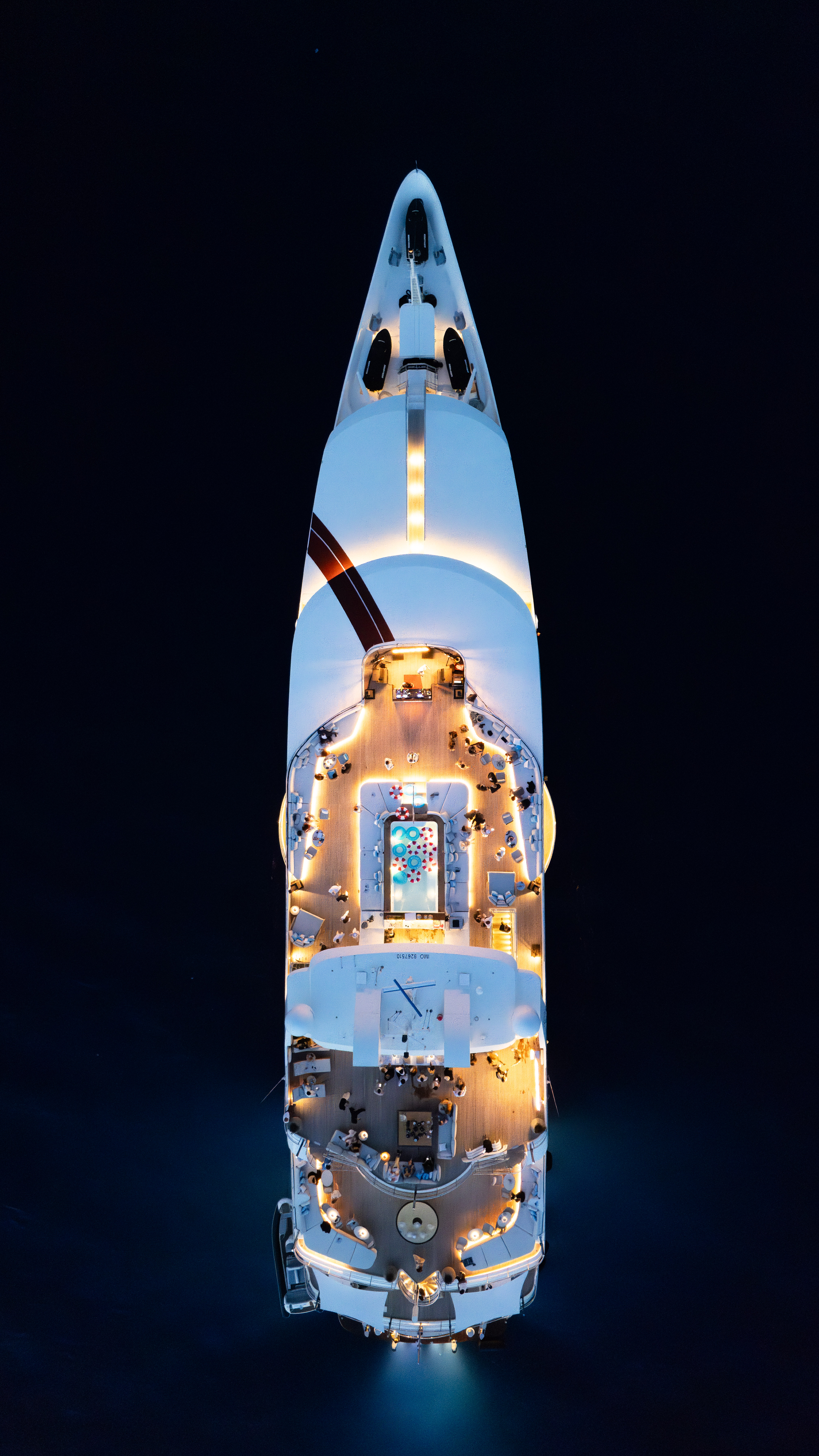
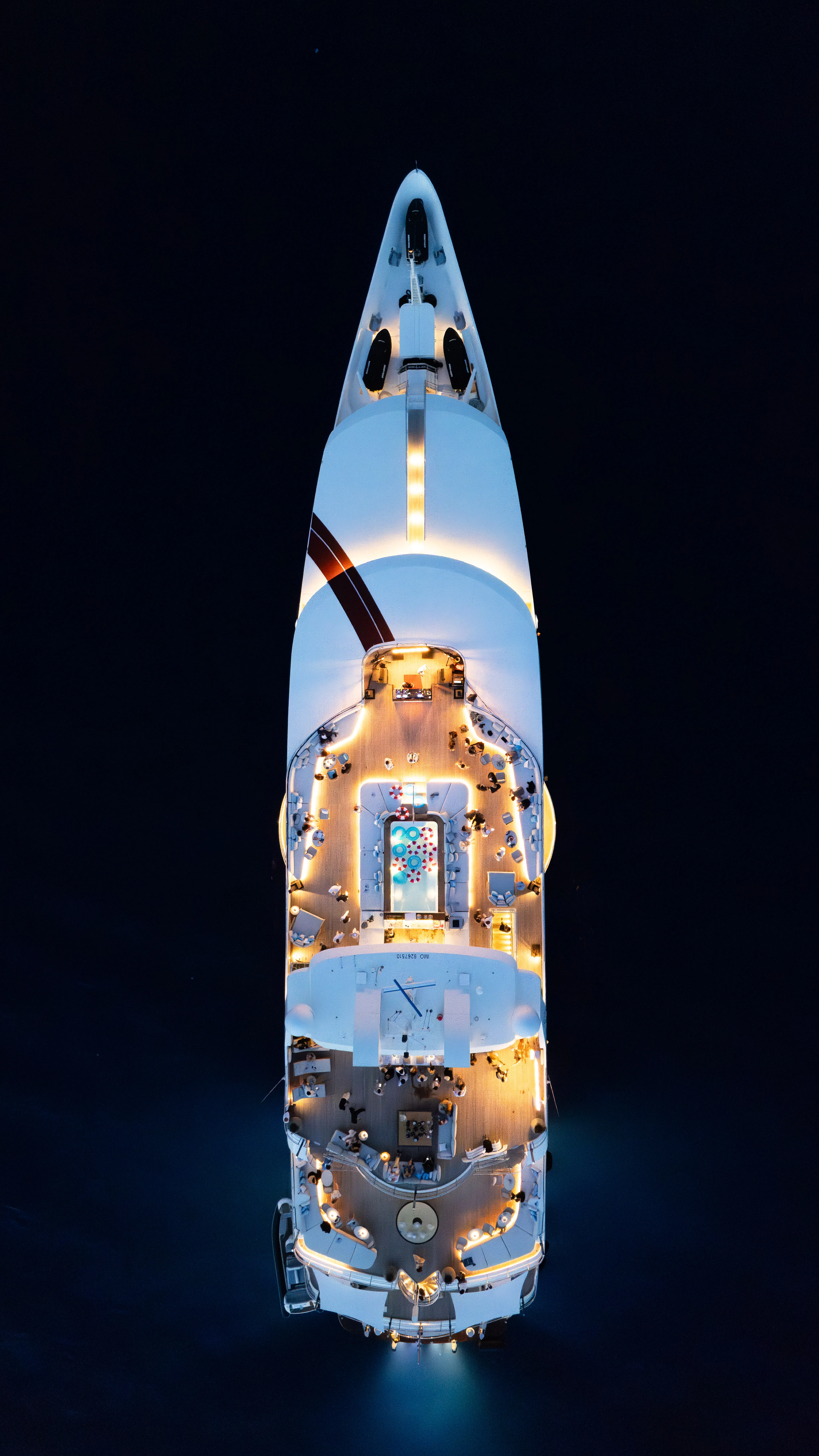
The Floating Art Hotel transforms a 72-metre superyacht into a travelling world of contemporary art, luxury hospitality and cultural exchange. Following major international events, the project brings collectors, artists, founders and other guests together in an intimate setting where exhibitions, performances, dining and conversation unfold against the backdrop of the sea. Founder Gaëlle Jaunay-Callendini discusses the concept’s origins, operational challenges and evolving international vision.
Matthieu Le Stang-Heyn: What inspired you to choose a superyacht rather than a traditional gallery or boutique hotel?
Gaëlle Jaunay-Callendini: The idea was never simply to put art on a yacht. It was to create a place that could move with the international cultural calendar and bring together people who might not normally meet. A yacht gives us that freedom: it can become a hotel, exhibition space, private club and setting for conversations, dinners and encounters before moving to another city and context. During the Monaco Grand Prix, we were at the heart of one of the world’s most intense sporting events, yet created something entirely different within it. Art, sport, the sea, gastronomy and the right people came together in one place. That contrast is at the heart of The Floating Art Hotel.
MLSH: How does exhibiting work by artists such as Marina Abramović, Jeppe Hein and Tomás Saraceno aboard a yacht change the way guests experience art?
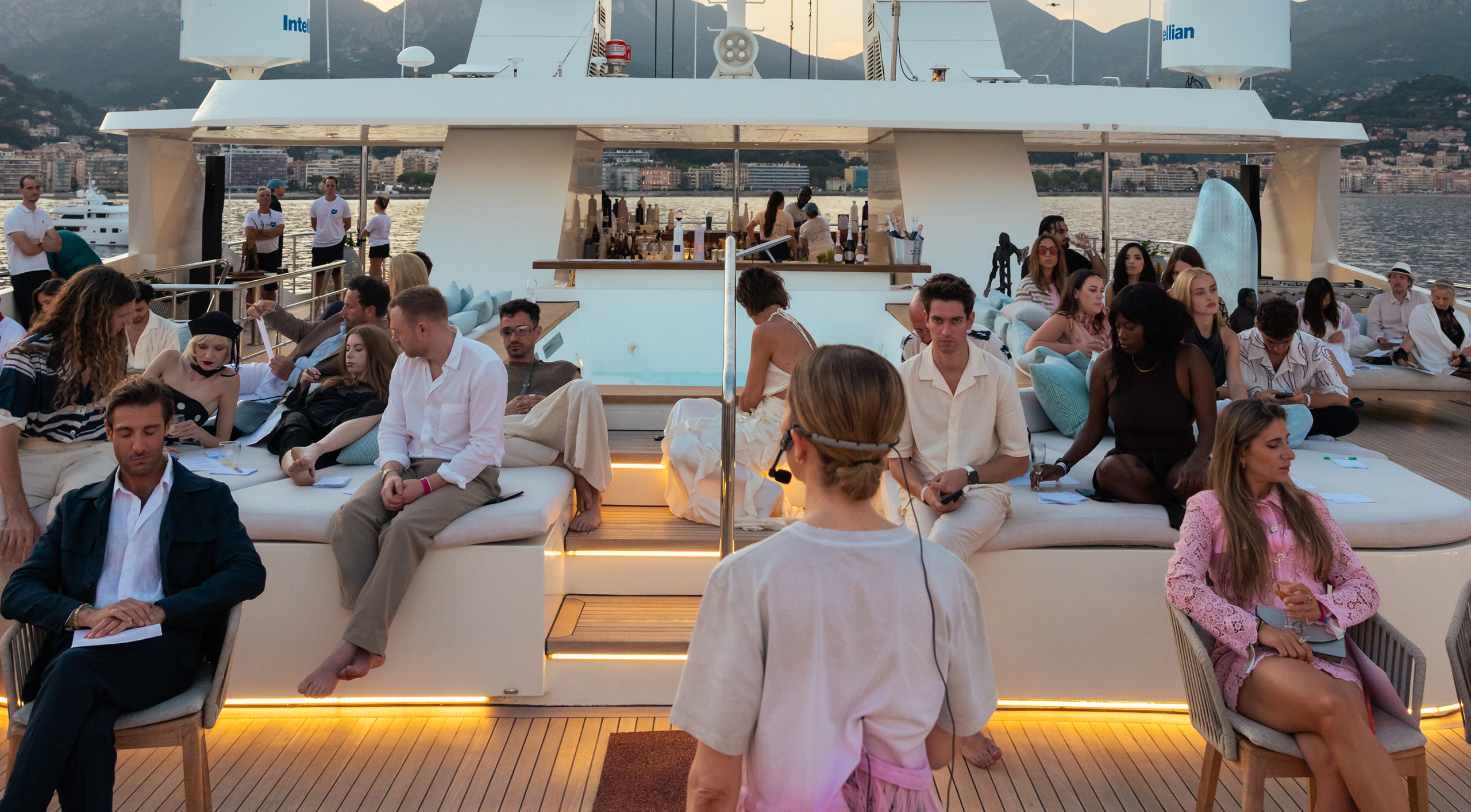
GJC: It removes some of the distance found in a traditional art environment. A guest might discover a work during a guided tour, encounter it again on the way to dinner and see it differently later that night after a conversation with someone onboard. Art becomes part of life rather than something you stand in front of for a few minutes. Because the number of guests is limited, there is also time for meaningful conversation. Collectors can speak with our curator, discover unfamiliar artists, exchange ideas and, in some cases, acquire works. Guests could even select a piece for their cabin, while artists onboard gave performances. The art was accessible and alive—not confined to a white box.
“On The Floating Art Hotel art becomes part of life rather than something you stand in front of for a few minutes.” – Gaëlle Jaunay-Callendini
MLSH: How did you balance the demands of art conservation, yacht operations and high-end hospitality?
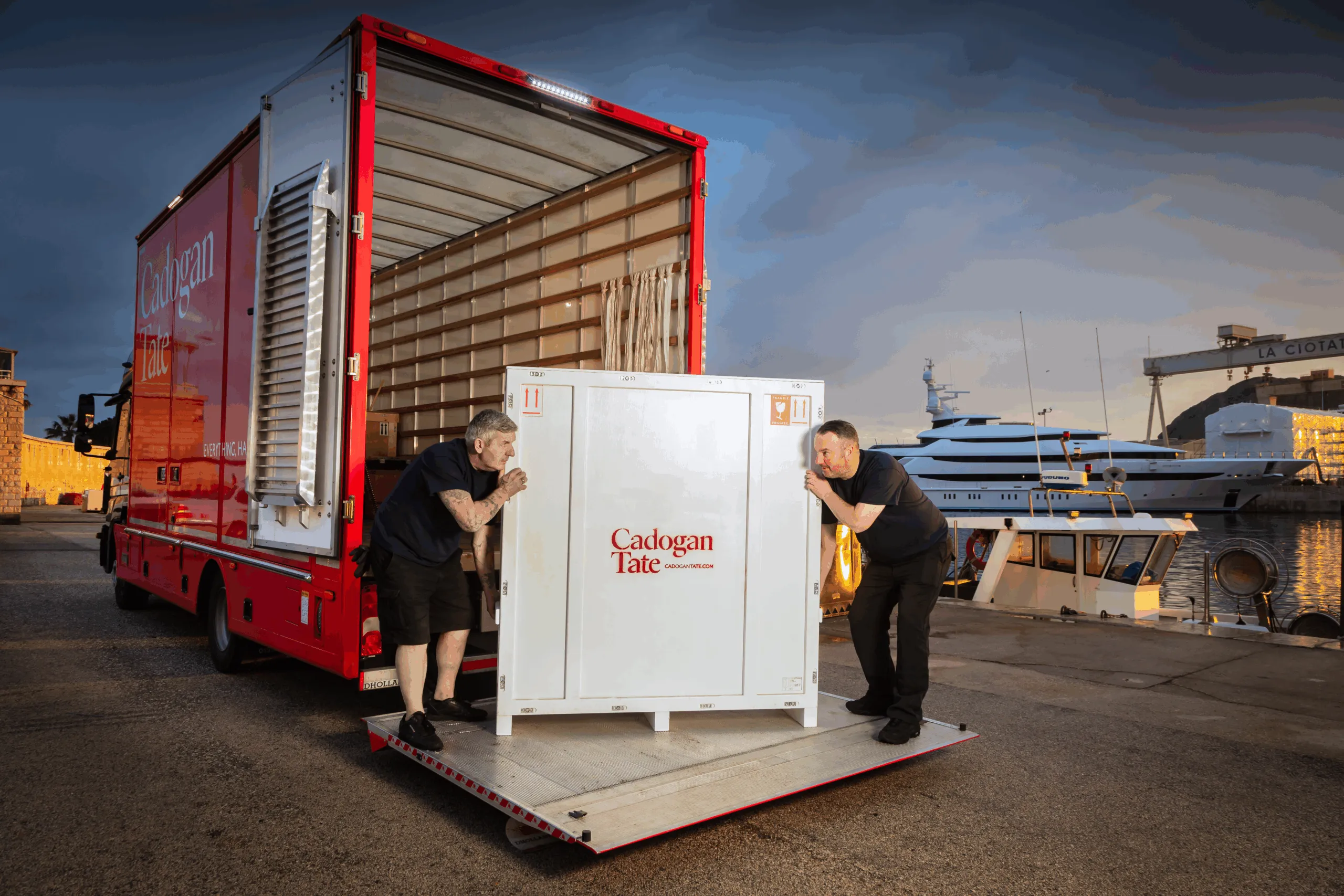
GJC: The greatest challenge was bringing together worlds governed by very different rules. A superyacht is a highly controlled environment, while an exhibition has strict requirements for installation, handling, security and conservation. Monaco during Grand Prix week added restricted access, tenders, deliveries, crowds and an intense schedule. Preparation and collaboration were essential. Over eight months, we made multiple trips to Greece to understand every wall, hanging possibility and movement route aboard the vessel. We worked with the owner and crew to decide what could be removed, changed or concealed to create visual coherence. Our curator, production team and art handlers then coordinated the collection of works from galleries and collectors and transferred them through the port and onto the yacht. The experience itself was choreographed, with distinct moments and spaces for art tours, private dinners, cocktails, conversation and celebration. The technical precautions remained invisible so that guests could feel at home. The captain and crew were fundamental: they knew the vessel’s possibilities and limits, while we brought the artistic and cultural dimension. By opening night, everyone had to operate as one team. For future editions, we look forward to working with Cadogan Tate to streamline the installation process further.
MLSH: How did the arrival journey become part of the experience?
GJC: The journey begins at the port. Tender operations were crucial: if guests had waited an hour among the roughly 43,000 people in Port de Fontvieille over the weekend, the experience would already have failed. We created two pickup points, at Fontvieille and Mareterra, where we partnered with Gallery Art21. Guests could wait in an air-conditioned lounge with champagne before their transfer. Working with Roel and the Hopax team, we secured three additional tenders, including a branded Proton and a Boston Whaler for more comfortable nighttime transfers, alongside the yacht’s two tenders. There is something powerful about leaving the noise of the event behind, seeing the yacht from the water and gradually approaching it. Arrival should not feel like transportation; it is the first chapter of the experience. Guests enter a world that feels removed from the city even while remaining at the centre of everything.
“I hope guests remember the people as much as the art: an artist they discovered, a work they fell in love with, an unexpected conversation over dinner or an idea or collaboration that began onboard.” – Gaëlle Jaunay-Callendini
MLSH: How will the concept evolve in future destinations, and what do you hope guests take away from it?
GJC: We do not want to reproduce Monaco in another city. Each edition should respond to its location, cultural context and local community. The format remains recognizable, but the artists, collaborations, culinary experiences, conversations and guests can evolve. Our programme follows major moments in art, culture, design and sport. Planned editions and activations include Art Basel Paris, Art Basel Qatar in Doha, Art Basel Hong Kong, Singapore Art Week, Art Basel Miami and the Monaco Grand Prix in 2027. We curate the guest experience as carefully as the exhibition because exclusivity, for us, is not about being inaccessible—it is about creating the intimacy required for genuine connections. The yachts, cities and exhibitions may change, but the community and relationships continue. That is the true legacy of a nomadic project.
To learn more about the Floating Art Hotel click HERE.
To learn more about Cadogan Tate’s Yacht Services, click HERE.
Related Articles
Kos Evans on Rock & Royals
Gaëlle Jaunay-Callendini and the Floating Art Hotel
Chris Frisby of the UKSA on the…