


Lucy Bishop, the Fashion Auctioneer

By Gemma Sudlow, EVP, Group Commercial and Marketing
Lucy Bishop is the founder of The Fashion Auctioneer, a specialist luxury auction house dedicated to rare vintage fashion, haute couture and luxury handbags. Lucy is an internationally respected auction specialist and trusted advisor to museums and private collectors. With two decades of experience handling notable wardrobes, including those of Princess Diana, Carolyn Bessette Kennedy and Audrey Hepburn, Lucy brings expertise in both the monetary and cultural value of fashion. I’m pleased to share these highlights from a recent discussion with Lucy where we explore collecting vintage fashion and luxury handbags, the importance of provenance, and how to care for a collection.
Gemma Sudlow: What should collectors look for when buying vintage fashion and luxury handbags at auction? From provenance and condition to rarity and cultural significance, what separates a truly collectible piece from something that is simply desirable?
Lucy Bishop: Both selling and buying at auction is a fantastic way to build a fashion collection or elevate your wardrobe. Fashion is a nuanced subject and there are a myriad of factors which make an item museum-worthy, but generally speaking look for good condition, key looks by major couturiers. And if the item was worn by a cultural figure, the provenance can significantly increase its value. Always buy from a reputable source—the internet can be a Wild West for collectors, especially for luxury handbags.
“Ensuring an item is placed with the right specialist is crucial—how an item is researched and positioned in the market can significantly impact sale results.” – Lucy Bishop
GS: What gives vintage fashion lasting value? Are there particular designers, periods, materials or types of provenance that tend to make a piece especially significant to collectors?
LB: The most rare and exceptional pieces of fashion will attract interest from major museums, as well as private collectors. Haute couture from major designers is always desirable. People collect for different reasons—some are purists and may only collect one designer or period, and they may never wear the pieces. Increasingly modern-day collecting is a hybrid: collectors appreciate and care for their items whilst still wearing and enjoying them. The wonderful thing about being a collector is that you get to decide what makes an item special to you.
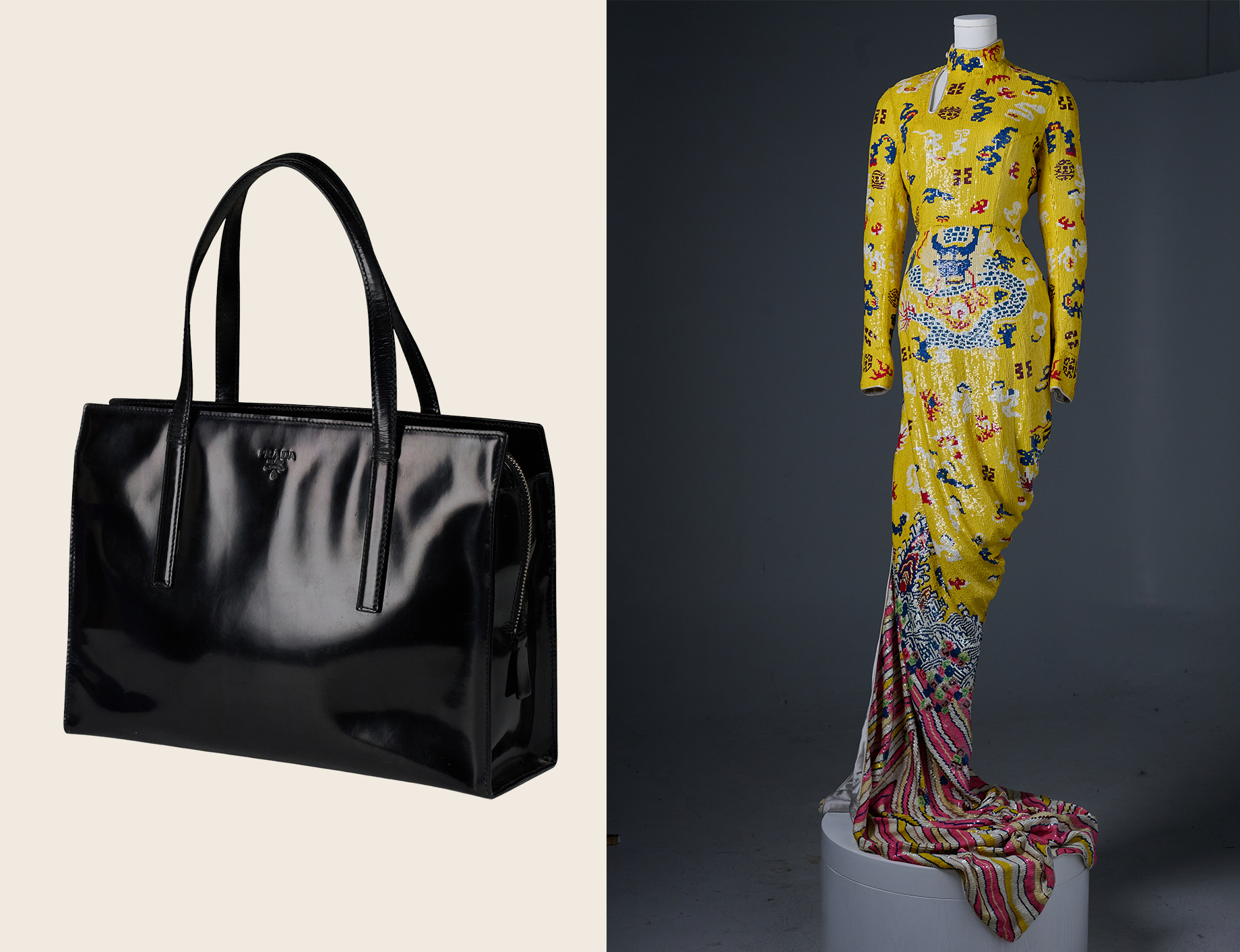
Above – Left: Prada Spazzolato black patent leather handbag, circa 1996 (estimate $1,000-1,500, auction 15th December) / Above – Right: A rare Tom Ford for Yves Saint Laurent chinoiserie sequinned evening gown, Autumn-Winter 2004-05 (sold via private sale)
GS: How is the market for collectible fashion and luxury handbags changing? You mentioned that these are actually quite distinct markets. What are you seeing from collectors today, and are there particular categories or designers attracting greater interest?
LB: People tend to assume that fashion and handbags are one and the same, but they are two very distinctly different markets (although you do need a great handbag to accompany a great dress!). John Galliano for Dior and Chanel are most sought after, as well as early works by Martin Margiela, with prices for major works achieving in the hundreds and thousands. In recent years there has been a huge increase in demand for 1990s and early 2000s fashion, which currently dominates the market. It is becoming increasingly more difficult to find exceptional, museum-worthy antique costume from the 17th, 18th and 19th centuries. Over the past 15 years, the market for luxury handbags has exploded, specifically for Hermès Birkins and Kellys. These can sell for three times their original purchase price at auction. But contrary to popular myths, they do depreciate with age—my advice is to have them appraised sooner rather than later if you are thinking of selling. Handbags and accessories by Chanel are also highly sought after, as well as limited editions by Dior and Louis Vuitton.
GS: How should collectors care for and preserve important fashion pieces over time? What should owners consider when it comes to handling, storage and long-term preservation, particularly for delicate or historically significant garments and accessories?
LB: Fashion is a particularly delicate collectors’ category and it is very important to store items with care. Keeping garments in a cool, temperature-controlled environment away from light and pests is crucial. I’m always happy to advise my clients on appropriate storage. For example, certain pieces may need to be stored flat to prevent the weight of the fabric damaging the piece over time. Always ensure clothing is dry cleaned after wearing before putting into storage—that spill of champagne you dabbed with a damp cloth may appear invisible today, but it will reveal itself over time in storage if not taken care of. It’s one of the most common condition issues I find when examining evening gowns—but it always makes me smile as I think ‘gosh she must have had a fabulous night out!’.
“Fashion is a nuanced subject and there are a myriad of factors which make an item museum-worthy, but generally speaking look for good condition, key looks by major couturiers.” – Lucy Bishop
GS: What role does provenance play in collecting fashion? Fashion pieces can carry histories that extend well beyond the object itself. How important are ownership, cultural context and the story behind a piece in determining its significance and desirability at auction?
LB: Provenance can add several ‘0’s to the value of a piece. For example, I was recently entrusted with the sale of Carolyn Bessette Kennedy’s Prada coat from 1996, which achieved $192,000. I have also conducted the research and sale of many pieces from the wardrobe of Princess Diana. Ten years ago, a gown from her personal wardrobe may have achieved six figures, but in the present-day market they can achieve one million dollars or more. By contrast, an identical gown (but not worn by her), may only sell for a few hundred dollars. Ensuring an item is placed with the right specialist is crucial—how an item is researched and positioned in the market can significantly impact sale results. I specialize in the cultural value of fashion. Whether an item is worth $300,000 or $300, it’s important the piece is handled with care. One of the favourite pieces I have ever handled is a mini dress formed from a printed silk panel depicting ‘The Total Liberation of Africa’ by Ethiopian artist Afewerk Tekle. Dating circa 1965, it was home-made by an unknown seamstress, likely someone young and active in the civil rights movement. It sold for a humble price at the time, but now resides in the permanent collection of The Metropolitan Museum of Art. I consider that a worthy result!
To learn more about Lucy Bishop click HERE.
Related Articles

Business Age: Credence, Where Credence Is Due
PLATFORM: Simone Brewster and Spirit of Place

Lucy Bishop, the Fashion Auctioneer