Art Installation Services: Global Fine Art Handling
By Zach Botham, Chief Art Technician
It can all be gone in an instant. A painting that survived two centuries can be ruined in two seconds by the wrong mounting hardware or an awkward grip during hanging. In my years as an art handler, I’ve seen a lot and what has become abundantly clear is that a team that understands the intricacies of art installation, from technical knowledge of hanging systems to the ability to handle priceless objects with the utmost care, is invaluable.
Here’s what art installers actually do, the types of artwork they work with, and the step-by-step process professionals follow to place pieces safely and beautifully.
What are professional art installation services?
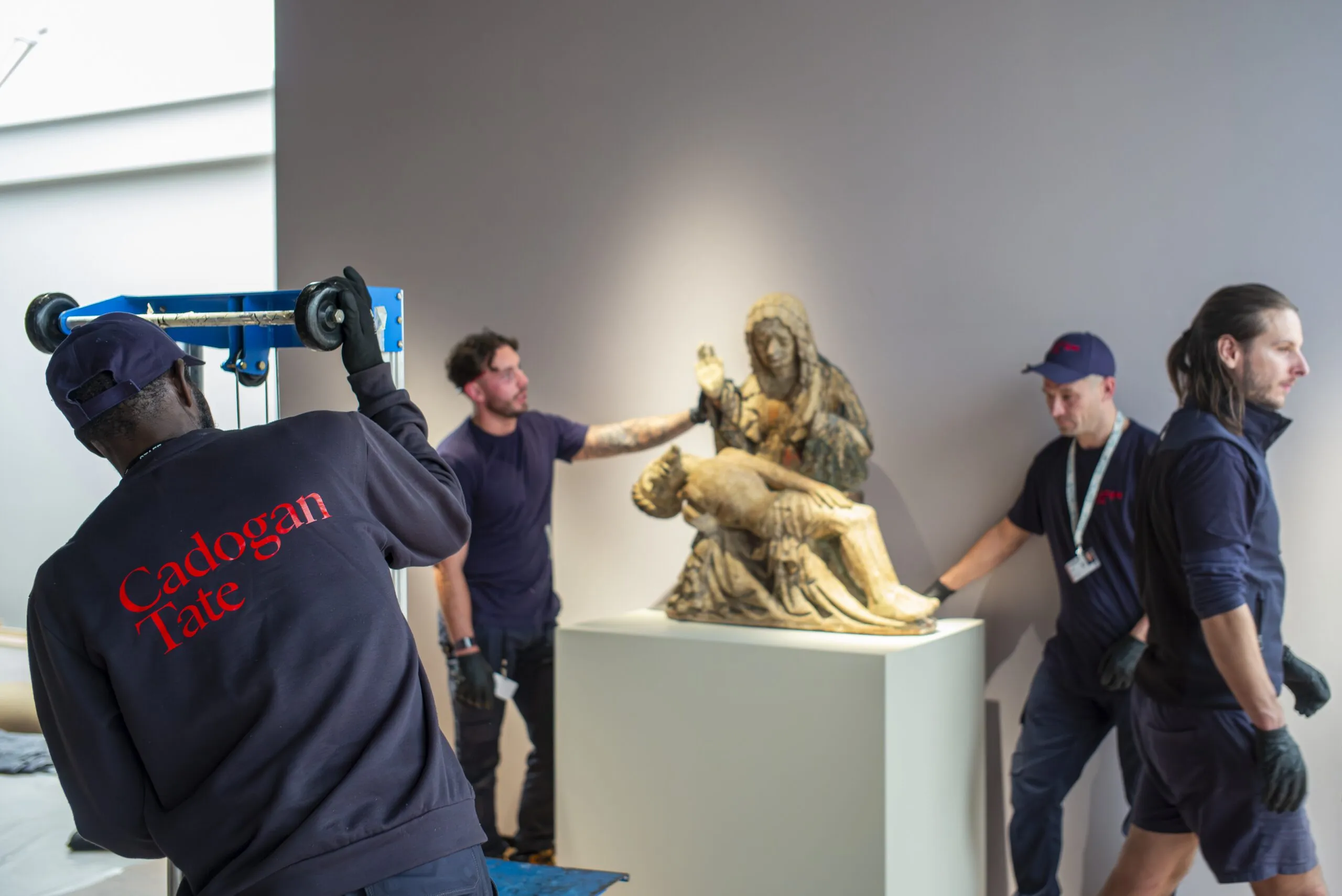
Professional art installation services go far beyond simply hanging a painting on a nail. At Cadogan Tate, my team and I work with trained technicians who handle, transport, and place artworks with the precision these pieces require. From assessing your space, to choosing the perfect hardware, to ensuring your piece is placed at the ideal height for viewing, everything is accounted for and designed to prevent damage.
The people who do this work typically come from museum backgrounds or have years of experience handling fine art. They know that a hundred-year-old oil painting requires different treatment than a contemporary photograph. They know how different walls behave. They’ve done the work.
Art installation services cover four main areas:
- Site assessment: Evaluating walls, lighting, and structural capacity before anything is hung
- Custom mounting: Selecting the right hardware for each artwork and wall type
- Precision placement: Laser levels and professional tools ensure artwork hangs straight, at the correct height, with proper spacing between pieces
- Gloves, padding, and careful handling techniques prevent the scratches and surface damage that can occur during amateur attempts
Why hire professional art installers?
People hang things on their walls every day without calling in the experts, so why is a professional art installer really necessary? It depends largely on what you’re hanging and how much it matters to you. 75% of high-net-worth individuals now feel they need to take greater steps to safeguard their possessions, and this is where we come in.
Protecting irreplaceable and high-value artwork
Damage to valuable art often happens in ways you don’t expect. One of the first things I train new handlers on is the importance of maintaining vigilance in every moment. Professional installers know how to move artwork without touching painted surfaces or putting pressure on fragile areas, for example. For pieces of high financial or sentimental value, this expertise provides invaluable protection against the accidents that can happen when you attempt it yourself or with a less specialized moving team.
Ensuring adequate structural support
Different walls require different hanging techniques. Hardware that works well in one situation can completely fail in another. Skilled installers are able to assess a wall’s composition before selecting hardware, and consider factors homeowners often overlook (think: electrical wiring, varied stud spacing, load distribution, and more).
Achieving museum-quality visual placement
Ensuring that a work looks excellent in its final location is essential. Standard guidelines place the center of an artwork at eye level, but ceiling heights, where the piece will be viewed from, and furniture placement should all be considered. It’s something I think about on every installation. Placement isn’t just simple geometry, it needs to take into consideration how a person will actually live with the piece within the specific room. Trained installers also consider how natural and artificial light will interact with each piece throughout the day. A painting that looks perfect in the morning hours might develop distracting glare by late afternoon.
Types of artwork professional installers handle
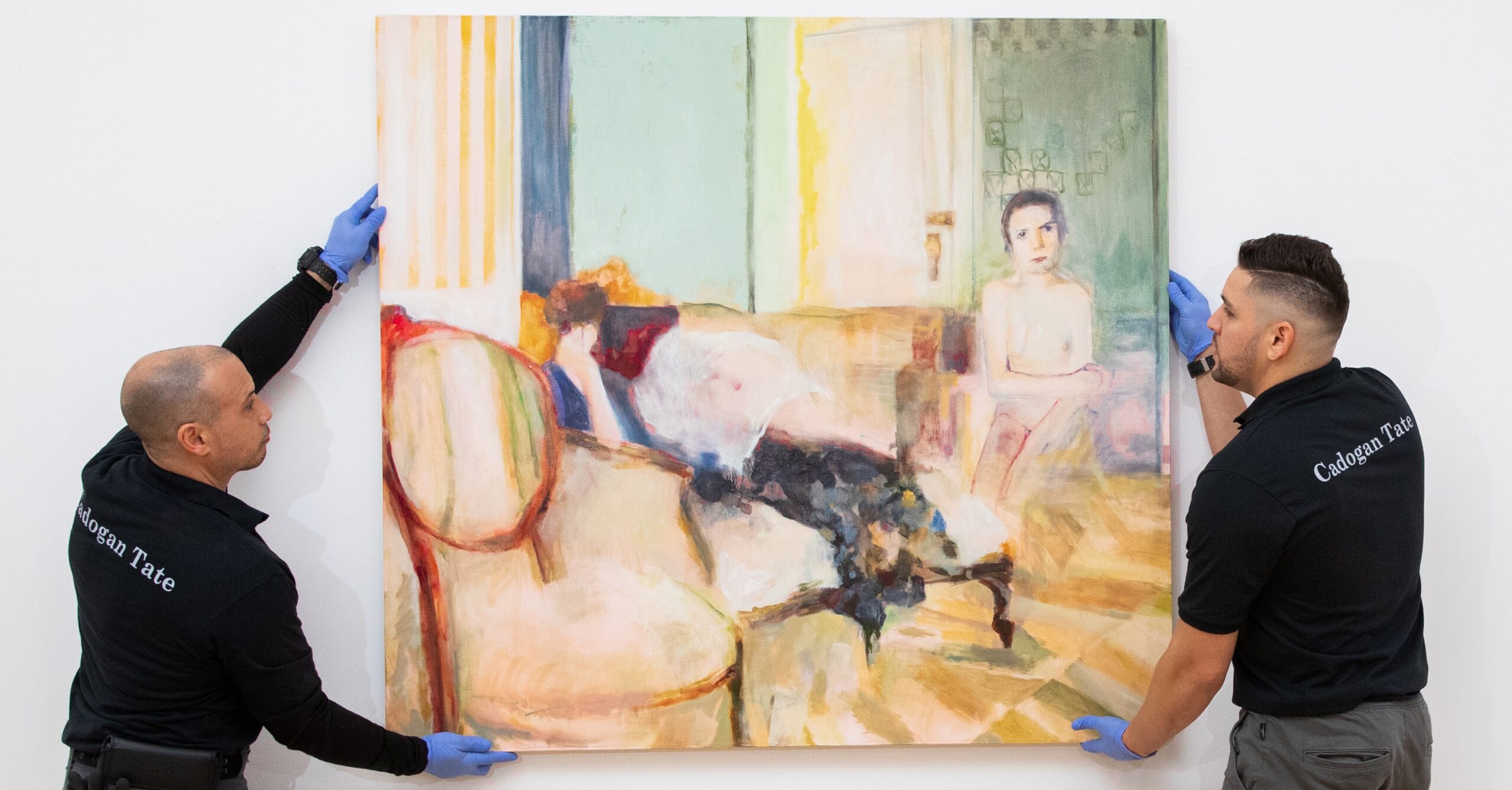
Paintings and framed works are one of our most common installation requests, and every job is different. A large oil painting in an ornate frame might weigh over 50 pounds, while a similarly sized contemporary work could weigh a fraction of that, as the most obvious example. Frame, glazing, and mounting style also impact how a piece is hung.
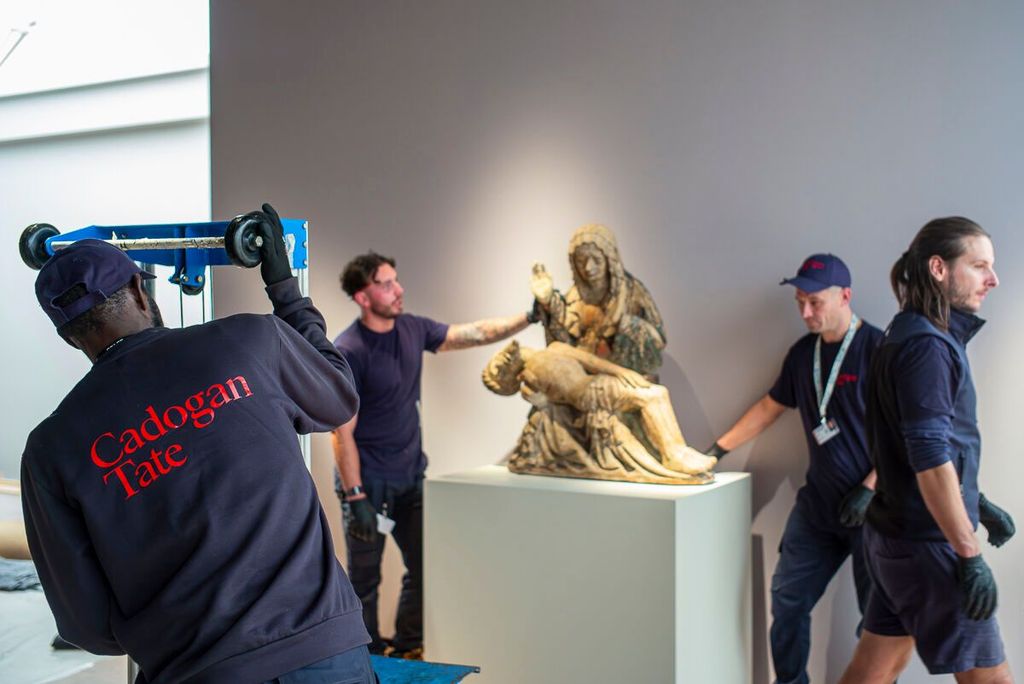
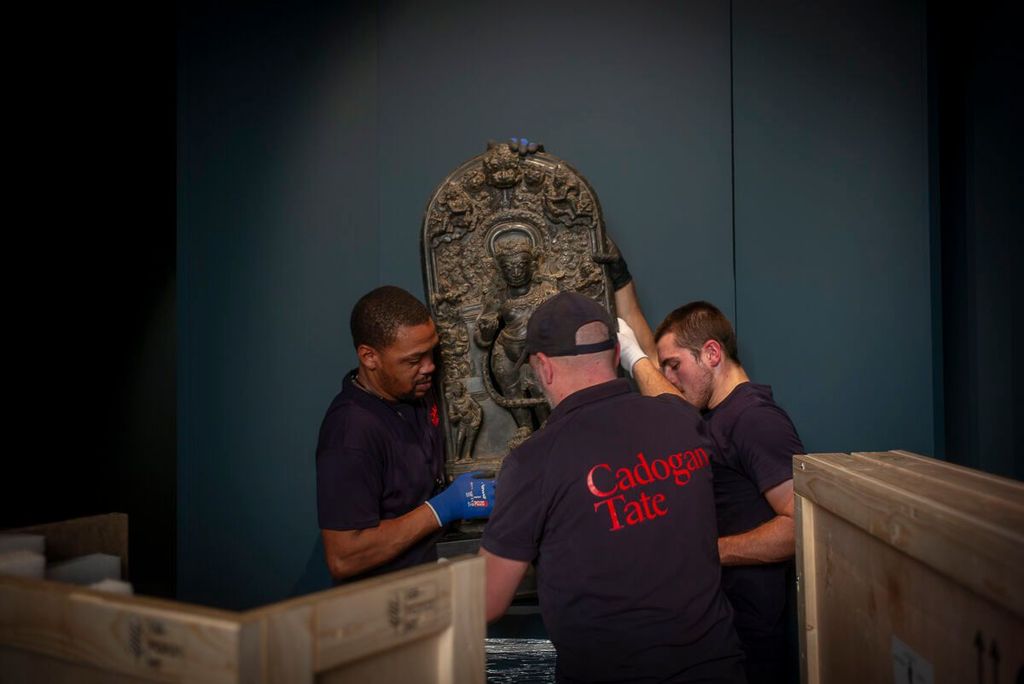
Sculptures require stable pedestals or custom brackets depending on the material and where it will be installed. A bronze sculpture and a ceramic piece of the same size require very different handling approaches.
Mirrors present particular challenges due to their weight and fragility. Professional installers use multiple anchor points to distribute the load.
Oversized and heavy pieces may require numerous team members, rigging, or mechanical lifts. We plan for these instances well in advance of installation to ensure pieces will reach their intended location.
Tapestries and textile art need mounting systems that distribute weight evenly without creating stress points. Humidity fluctuations are also a greater concern with textiles than most other art forms.
Work with Cadogan Tate for expert artwork installation
Cadogan Tate’s fine art services combine best-in-class installation services with climate-controlled storage and global shipping capabilities. All of our clients work with a dedicated team member to coordinate everything from initial site assessment through to final placement.
To discuss your art installation project, get in touch with our team.
Related Articles

Lucy Bishop, the Fashion Auctioneer
Inside the World of PAD

Nicole Darnell of Design Miami on Success…